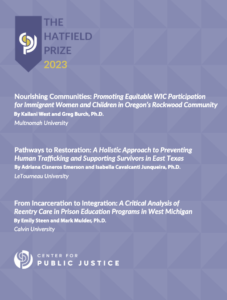
 The Center for Public Justice (CPJ) is thrilled to introduce this year’s Hatfield Prize reports! We want to thank Kailani West (‘23 Multnomah University), Adriana Cisneros Emerson (‘23 LeTourneau University), and Emily Steen (‘23 Calvin University) for their dedicated efforts in researching and writing these reports. We would also like to extend our thanks to Greg Burch, Ph.D., Isabella Cavalcanti Junqueira, Ph.D., and Mark Mulder, Ph.D. for their valuable guidance and support.
Kailani, Adriana, and Emily examine and explore how the government and surrounding institutions can better support efforts on WIC access for immigrant women and children in the Rockwood community of Oregon, prevention and aftercare for human trafficking survivors in East Texas, and the barriers to reentry for formerly incarcerated people in Western Michigan.
The reports positively contribute to social policy conversations centered around the flourishing of children, teenagers, families, and especially vulnerable and disadvantaged groups or individuals. By integrating faith-based concepts and principles with comprehensive research, these research teams outline practical recommendations to government and civil society on how they can better promote human flourishing.
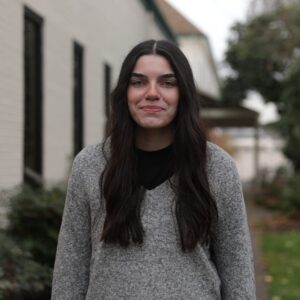 Kailani West (‘23) received her bachelor’s degree in global studies with a concentration in culture and diversity from Multnomah University. She currently is studying to receive her master’s in global development and justice from Multnomah University. She also interned for Multnomah’s Voices of Scholars program her senior year there and dedicated time teaching English at a local immigrant and refugee resource center. Kailani is currently interning with Globalscope in Tübingen, Germany.
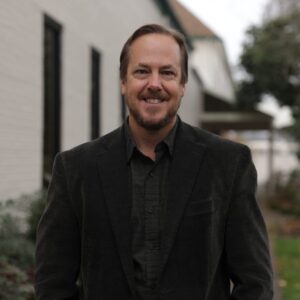 Greg W. Burch, Ph.D., is Associate Professor and Chair of the Global Studies department at Multnomah University in Portland, Oregon where he also serves as director for the graduate degree program in Global Development and Justice. Burch earned his M.A. and Ph.D. degrees at Fuller Theological Seminary. Prior to his current role, he lived and worked in Caracas, Venezuela and San José, Costa Rica where he served in advocacy and teaching roles in support of vulnerable children and youth. His work and research focus on transformational development topics and supporting marginalized youth and children. He and his wife Christina have two children and live in Oregon City, Oregon.
 Adriana Cisneros Emerson (‘23), from Caracas, Venezuela, is an integrated media management graduate from LeTourneau University. Having also minored in political science, she graduated summa cum laude in May 2023 and received the Top Senior in Communication award. She received her associate degree in journalism from Kilgore College with presidential honors. During her time as a student, she utilized her skills in translation to assist the parole division of the Texas Department of Criminal Justice in Longview, Texas. She also collaborated with international organizations to advance the healing of victims of sexual violence. Since graduating, Adriana has been working as communications associate at the Center for Public Justice. She is a member of Phi Theta Kappa honor society and of the National Society of Leadership and Success.
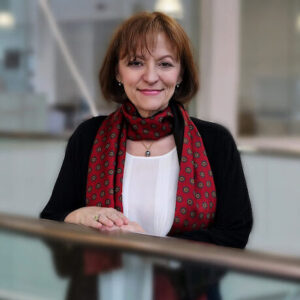 Dr. M. Isabella Cavalcanti Junqueira is a professor of entrepreneurship and marketing at LeTourneau University in Longview, Texas, USA. Her recent research focuses on relationships and knowledge exchanges at the intersection of corporate and society’s interests arising from entrepreneurship and organizational fields, including strategic management, trust, and decision-making. Dr. Cavalcanti Junqueira received her Ph.D. from Lancaster University Management School in the United Kingdom and her Master in International Business Development from Burgundy School of Business in Dijon, France. She is an active member and sits on executive boards for organizations in the creative and cultural industries. Dr. Cavalcanti Junqueira often volunteers for fundraising endeavors that support Christian organizations focusing on international outreach in entrepreneurial communities.
 Emily Steen (‘23) is a recent graduate of Calvin University, where she majored in sociology with concentrations in urban studies and criminology. While at Calvin University, Emily founded and led the Calvin Peacemakers, a restorative justice club focused on bridging the Calvin Prison Initiative and Calvin’s traditional campus. As a theater artist and activist, Emily is also passionate about arts education for underserved communities, especially those impacted by the carceral system. She is currently working towards a masters degree in theater education while working at theater companies across New Jersey, her home state.
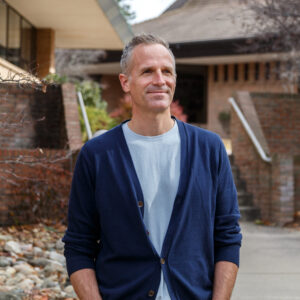 Mark Mulder, Ph.D. is Professor of Sociology at Calvin University where he teaches classes that range from Diversity and Inequality to Urban Sociology to Corrections and Incarceration. Mulder’s scholarship focuses around urban congregations and changing racial-ethnic demographics. He is the author of Shades of White Flight: Evangelical Congregations and Urban Departure (Rutgers University Press, 2015) and co-author of Latino Protestants in America: Growing and Diverse (Rowman & Littlefield, 2017) and The Glass Church: Robert H. Schuller, the Crystal Cathedral, and the Strain of Megachurch Ministry. In addition, Mulder has published numerous peer-reviewed articles in academic journals, including Social Problems and The Journal of Urban History. He has also published pieces for church audiences and won awards from the Evangelical Press Association and the Associated Church Press for his writing.